When your self-worth is tied to your results at work
The problem with trying harder
 Michael Greenspan · September 24, 2026 · 2 min read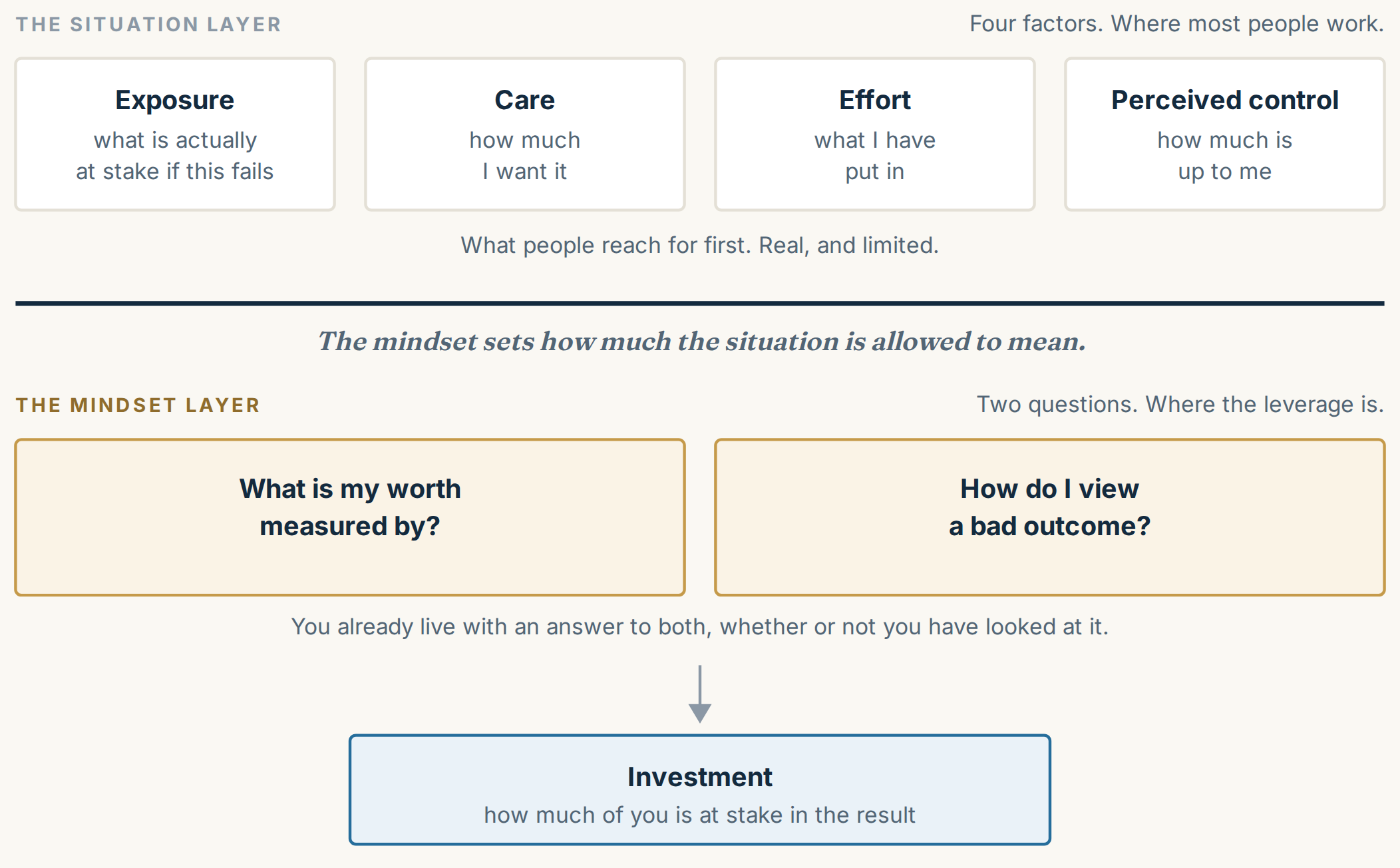
When things don’t go well for a leader, it can lead to feelings of “I’m just worthless!”
The team under-delivers. You don’t get an amazing performance review, or you don’t get a promotion.
And that leads to emotional pain. Distraction. Preoccupation. Second-guessing yourself.
The move everyone reaches for first
Many people try to address this by thinking: okay, you know what, I’m just going to try harder. I need to focus more. I need to get better advice and just figure out how to do my job even better.
The problem with that approach is that you’re still externalizing your self-worth, and making it depend on something outside of yourself.
Yes, if you try harder, you may get a better performance review, and maybe you’ll feel better for a little bit.
But then what happens when that thing called the human condition comes into play, and your performance isn’t as good?
You’re outsourcing the emotional stability that you have to results that are not always in your control.
A more foundational place to look
Rather than increasing your efforts to attain a certain result, a much more foundational place to focus is to explore the assumption behind that self-judgment.
Why does the result of this endeavor get to determine my worth?
When we can detach our self-worth from external circumstances that are outside our control and constantly shifting, that is going to be productive and rewarding in ways that just getting more results never can be.
I’m not saying there’s a switch
Now, I’m not saying that there’s some sort of switch that you can just turn off. As in: okay, now that I’ve told you something you probably know already, that I need to hold my self-worth apart from results, well, now I’m just going to do it.
It’s not so simple.
But I see people spending so much time just trying harder, trying to do better, when all that effort could be going into changing their perspective. Learning different approaches. Running experiments. Trying to change that assumption. Trying to change that belief.
Ultimately it’s a mindset, and mindsets can be changed. It’s the way you see things.
It could take months. It could take years. But as you proceed through life, you’re going to be much more calm, and have much more meaning in your life, when you’re focusing on changing your mindset instead of getting better results.
I’ve seen this in the people I coach and the people I speak with. And I’ve seen it in my own life over the past ten years.
Thanks for reading. If any of this is live for you right now, I’d like to hear about it.
— Michael