Three ways through a hard stretch
What I learned from fish in the dark
 Michael Greenspan · July 24, 2026 · 8 min read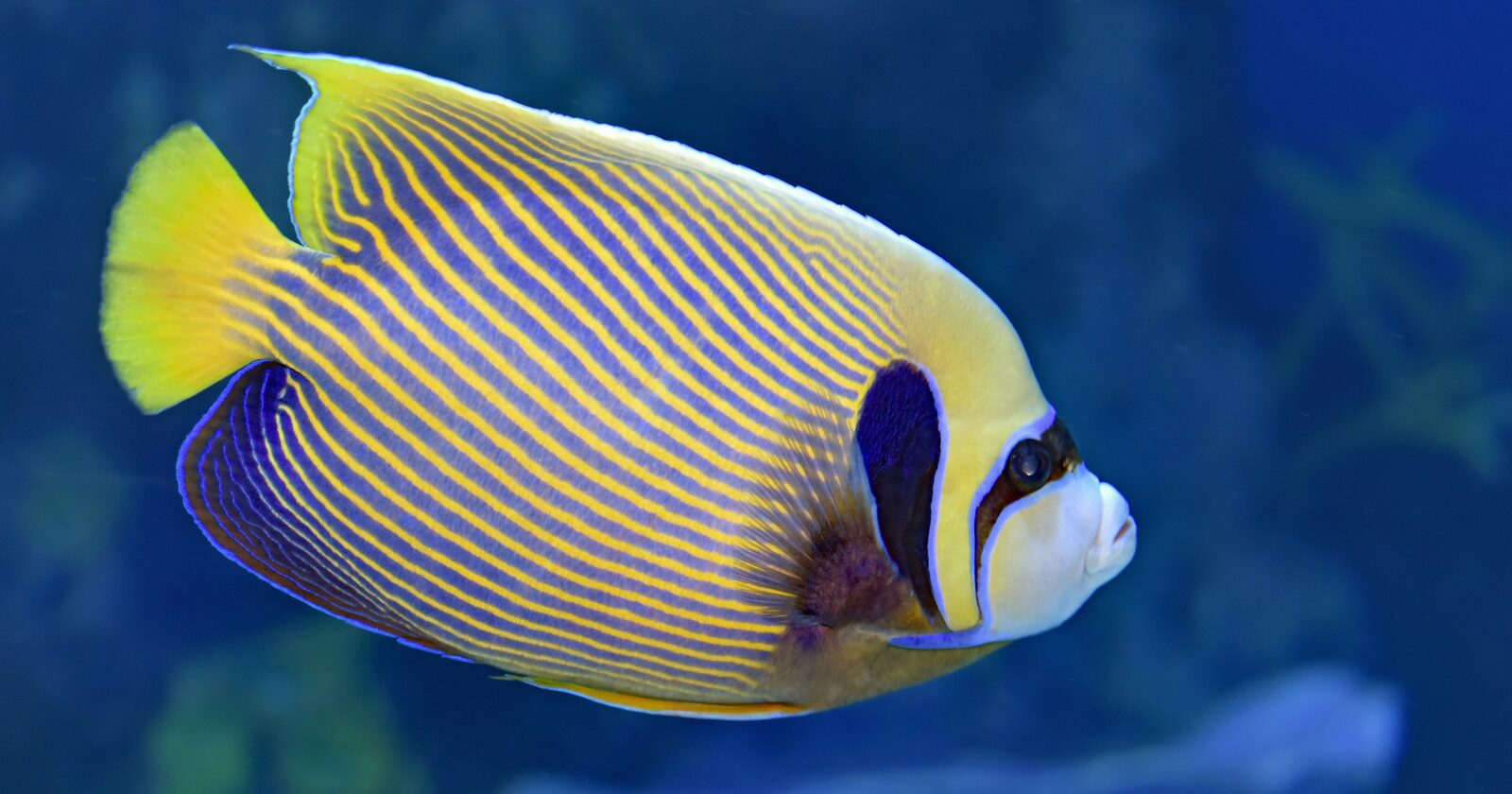
For about ten days, fish kept showing up in my life, and I’ve decided to take it personally.
It started when my six-year-old came home from camp holding a little jar she’d decorated herself. Inside was a goldfish. I was not hopeful about the prospects for this fish, and it unfortunately died the next morning, as pets in our house tend to.
But then my twelve-year-old, who runs a small backyard camp of her own, loved the idea and wanted to do the same for her campers. So after a trip to the pet store, she brought home a bag of feeder fish for the campers, and we kept three.
(One is still alive at the time of this writing. By our standards, that’s a strong showing!)
And then a couple of days later, my wife and I had a day set aside for the two of us and with the air outside thick with wildfire smoke, an indoor activity was in order. Fate would have it that we decided to go to the Toronto Ripley’s aquarium.
More fish!
Why all of this talk of fish?
As we drove down to the aquarium, my wife and I realized how prominent fish had been over the past few days. I don’t believe in coincidences, so I couldn’t shake the sense that all these fish had to mean something. So as I entered the aquarium, I was in full meaning-seeking mode. Surely everything being so fishy must have some purpose behind it?
In the first section of the aquarium, I noticed how many of the fish were brilliantly colored. Deep reds and oranges, colors that look designed to be admired.
But then it struck me how the room around them is almost black. Signs forbidding flash photography abound.
And I realized that the room is dark because the fish are built for the dark. A lot of them live hundreds of feet down, well below where sunlight reaches.
I was discussing this experience with a friend of mine, and he told me he was a diving instructor. He once cut himself diving deep and watched the blood run green, because down there, red simply isn’t available to the eye. The frequency of light that lets us see red doesn’t even travel that far. Not only is it dark, but colors actually progressively stop existing the deeper you go.
So you get these creatures wearing extraordinary color in a place where the color can’t be seen. Not by us. In many cases, not even by them.
And I realized that the beauty is fully there. But the conditions to notice it aren’t.
The fish left me thinking about three different ways we relate to a hard stretch.
The people I sit with
A lot of my work is sitting with people in the middle of a hard transition. Out of work, trying to get rehired, trying to figure out what they even want to do next. It’s a genuinely disorienting place to be.
It can feel like sitting in darkness. Or sitting at the bottom of the sea, struggling to breathe. Struggling to see.
A couple of weeks ago I was talking with a woman going through a long, grueling job search. I asked what she might learn from this hard stretch once it was over. She said, I can learn that I’m strong enough to get through challenges.
That’s real. It is a mature way of facing a hard stretch: I know this will end. I’ll survive it, and I’ll have proof that I can.
When you’re inside it, simply believing you’ll reach the far shore is its own kind of achievement. That’s the first way.
The pinball table
But there’s a second way, one step deeper in.
In his classic Becoming a Technical Leader, the late Gerald Weinberg describes his growth journey as a pinball wizard.
He’d gotten good, but then hit a plateau. To move past it, he had to learn a new technique—and as soon as he tried, his scores dropped. He fumbled until the new move clicked and he became better than before. Then came another plateau and the cycle began again: new technique, dip, then a level he couldn’t have reached without it.
And that’s the second way. The low part, the dip, isn’t only something to survive. It’s the cost of the next level. You go down in order to come up further.
The morning I didn’t want to go
The third way is more subtle. And more difficult. But living with it can help make life much richer.
Notice what the first two have in common. Both treat the hard stretch as something you pass through on the way to somewhere better.
In the first, you endure it and arrive on the other side. In the second, you use it as a rung and climb past it.
Either way, the hard stretch is a hallway. The good part is somewhere up ahead, after the dark.
The third way is different, and the difference is easy to blur, so I want to be careful with it.
Here’s the version I lived. Just two days after my trip to the aquarium.
I didn’t want to go to a prayer service I attend each week. That happens to me more than I’d like to admit. Some mornings I find it hard, and this was one of them. But I made myself go anyway.
Then I sat there, not really present, running the same loop. I don’t want to be here. It’s nice out. I’d rather be home. I was going through the motions and I knew it.
At some point we reached the part where you pray quietly, on your own, and I caught myself at a small fork.
I could keep going through the motions and resenting them. Or, precisely because I felt so flat, I could bring a different kind of attention to the experience I was already having. Not to escape the low feeling or pretend it wasn’t there, but to see what else might be present within it.
I’d been reading a lot about meditation recently, so I quietly tried to fold a little of it into the prayer.
I won’t get into the mechanics, because that is a side point, but what’s important is that this turned into one of the best experiences of prayer I’ve had in years. Maybe ever, though I won’t push it that far.
And it wasn’t good despite the low place I started in. That low place made me try a different way of being there. If I’d walked in content, I’d have done exactly what I always do.
But it was the distraction, the not wanting to be there, that made me reach for a different quality of attention. I didn’t experience the connection despite the bad morning. The bad morning was the thing that made me look. The distance is what made me feel closer.
And that’s the third way.
In the first two, the hard stretch is something you move through.
Here, I stayed where I was and brought a different way of seeing to it. The morning did not become easier. But within the yearning for closeness, I was able to experience that very closeness I was looking for.
I want to be honest about what I’m not claiming. The morning was still hard. None of my resistance was imaginary, and I’m not telling you that every bad stretch is secretly a good one in disguise. That’s the kind of thing people say to skip over their own experience. What I’m saying is smaller and truer. The low place wasn’t only something to survive or climb out of. It was the condition that made me reach for a different way of seeing. It handed me something a good day never would have.
Back to the fish
And no, the fish, they didn’t stop coming! The night after that morning, a novel I’m reading turned to a scene underwater. The next day, I took another of my daughters to the mall, and we spent a long while at the Chinese supermarket, watching the live lobsters and crabs and oysters they keep on display. I hadn’t been there in twenty years.
I could write all of that off as coincidence. I’d rather treat it as a reason to look closer. That is where the noticing starts, and the noticing is why I sat down to write this.
That woman trying to learn that she’s strong enough to get through her challenge… She’s doing great, and most people don’t even share her mature view of how to navigate hardship, but I suspect there’s more waiting for her than she can see right now. There usually is.
Down where those fish live, the color is already there. Full, exact, vivid. On its own, the light that would reveal it just doesn’t reach that deep. The fact that we can’t see the color says nothing about whether it’s in the water.
But divers carry their own light down. Bring a full lamp into that same black water and the red returns, exactly where it always was. The color was never the part that was missing. What was missing was something to see it with, and that part you can carry with you.
A hard stretch can be like that. Not dark because nothing is there. Dark because what’s there hasn’t been lit yet.
And maybe that’s the part we can practice. Not waiting for the water to clear, or for the depth to end, but learning, with some intention, to bring a way to see into the place where we already are. However deep that turns out to be.